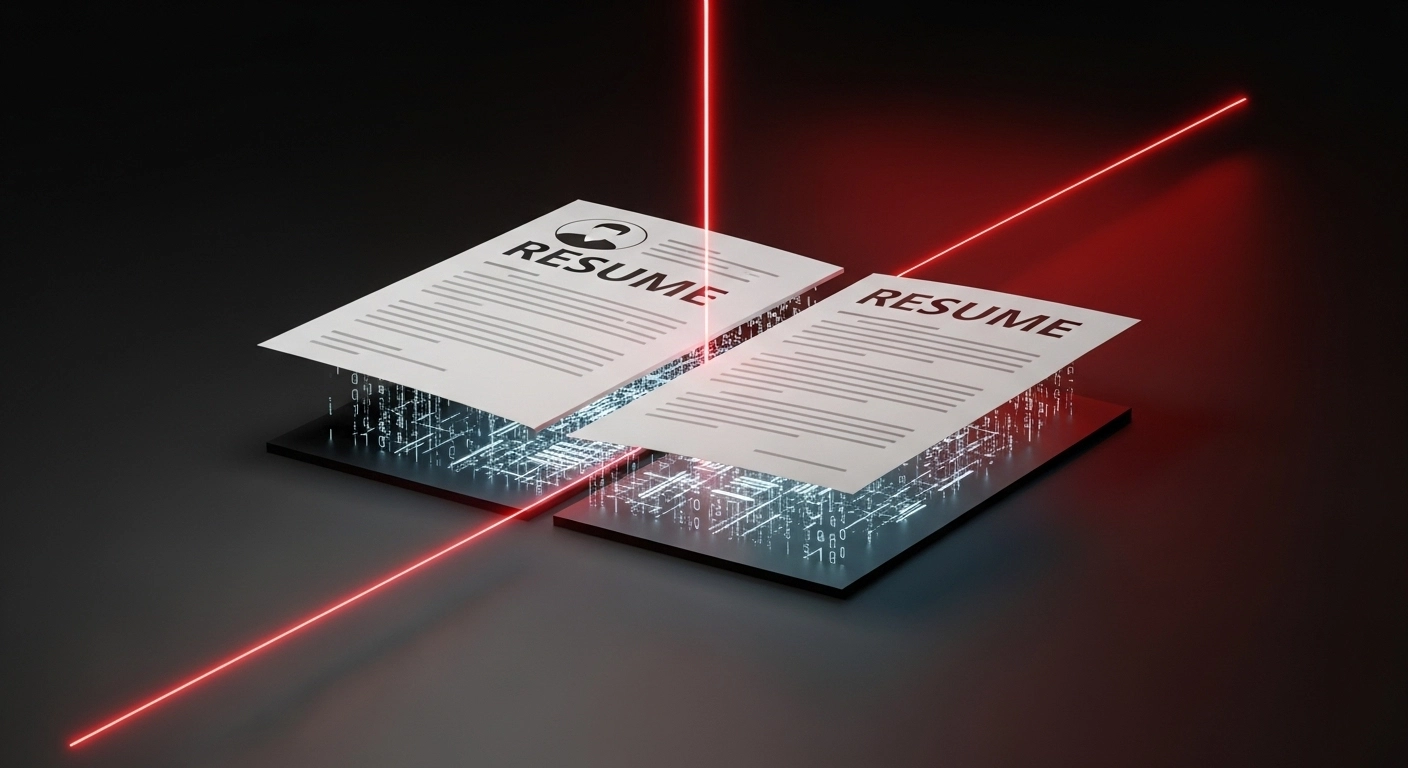
The Resume Is Dead. What Comes Next?
AI has officially killed the resume. Here's what smart companies are doing instead, and why the hiring industry will never be the same.
Let's not sugarcoat it. The resume, that sacred Word document we've all obsessed over for decades, is broken. Not bending. Not struggling. Broken. And AI pulled the trigger.
The Collapse of the Numbers
Twenty years ago, 1 in 20 job seekers found a role. Today, that number has collapsed to 1 in 200. There has been a 3× surge in inbound applications in 2 years, and Gartner predicts by 2028, 1 in 4 candidates will be fake. The math is brutal, and it's not the job market's fault. It's the process.
How We Got Here
It started quietly. AI writing tools made resumes easier to polish. Then came application bots firing off hundreds of applications overnight. Then deepfake profiles. Fake headshots. AI-generated cover letters perfectly tailored to every job description.
"A young man recently submitted 1 million job applications to land one job, not realizing he was part of the problem."
Recruiters responded the only way they could, by ignoring inbound applications altogether. Monster and CareerBuilder filed for bankruptcy. The pay-per-click model imploded. And hiring managers, drowning in noise, stopped trusting the signal entirely.
The resume didn't just get noisy. It became a liability.
Why Patching It Won't Work
Some companies are trying to fix this with stricter filters, longer application forms, or more screening rounds. That's not a solution. That's rearranging deck chairs.
The problem isn't that resumes are imperfect. It's that the entire inbound model is structurally broken. You can't add a bandage to a broken bone. True disruption doesn't patch broken systems. It replaces them entirely.
What Comes Next
Here's what the next generation of hiring looks like, and what companies that want to win the talent war are already moving toward:
1) Ditch the inbound application model. Stop waiting for talent to come to you. The best candidates aren't mass-applying, they're being found.
2) Replace the resume with verified signals. Look for skills, real work output, and assessments. Find anything that can't be faked in 30 seconds with ChatGPT.
3) Let AI screen for you intelligently. Go beyond keyword matching. True AI understands fit, context, and quality, giving your team only the best 1%.
4) Make hiring outbound. The job should find the candidate, not the other way around. Flip the funnel.
5) Restore trust in the signal. The next hiring system wins by making every candidate interaction verifiable, human, and meaningful.
The Companies That Adapt Will Win
This isn't a prediction. It's already happening. The organizations that cling to the resume-first, inbound-only model will keep drowning in noise, while their competitors move faster, hire better, and build stronger teams.
The question isn't whether the hiring industry needs a reset. It does. The question is: which side of the reset are you on?
Hire Smarter. Not Harder.
Kairox uses AI to cut through the noise, screening, matching, and shortlisting top candidates so your team only meets the ones worth their time.
Related Articles

Speed Is the New Currency in Hiring (2026 Playbook)
In 2026, top talent is on the market for days, not weeks. Slow hiring doesn’t just waste time, it hands your best candidates to faster competitors.

AI Resume-Based Bias; The Hidden Problem No One Talks About
Most AI hiring tools don’t just read resumes they inherit their bias. Kairox Talent360 shifts hiring from resume-first to skill-first so you don’t miss great talent.

7 Hiring Trends in 2025; And How Kairox Aligns With Every One
From AI-driven screening to fraud prevention and high-volume automation, here are the 7 hiring trends companies are adopting and how Kairox delivers on each.
Ready to transform your hiring process?
Join thousands of companies using Kairox to build better teams faster.
Get Started Today