
AI Resume-Based Bias; The Hidden Problem No One Talks About
Most AI hiring tools don’t just read resumes they inherit their bias. Kairox Talent360 shifts hiring from resume-first to skill-first so you don’t miss great talent.
The Hidden Problem With AI Hiring
AI hiring tools are everywhere. They scan thousands of resumes in seconds and promise faster shortlists and smarter decisions. On paper, that sounds ideal.
But there is a problem almost no one talks about. If an AI is trained only on resumes, it quietly inherits resume-based bias. It starts rewarding how good a resume looks on the surface instead of how strong a candidate actually is.
That means presentation can overpower capability, which is the exact opposite of what we want from a fair hiring process.
What Traditional AI Scorers Really Reward
Most traditional AI scoring systems lean heavily on signals that are easy to read from a resume. Fancy resume formats, big-brand company logos, prestigious colleges, keyword-heavy descriptions, and fluent English writing end up looking like “quality” to the model.
The issue is that none of these signals directly measure actual skill. They measure access, exposure, and how well someone has been coached on resume writing. Candidates who are great at the job but not great at presenting themselves on paper get pushed down the list.
Over time, this quietly reinforces the same patterns we claim AI will fix: bias toward certain backgrounds, certain schools, certain companies, and certain ways of writing.
A Simple Example
Imagine two candidates who both apply for the same role.
Candidate A has an elite college on their resume, a global brand name in their experience, and a beautifully polished layout. Their actual skill for the role is medium.
Candidate B went to a local college, worked at smaller companies, and has a simple, straightforward resume. Their actual skill for the role is high.
Most resume-first AI tools score them like this in practice, even if not in those exact numbers. Candidate A gets a high score because the resume looks impressive. Candidate B gets a lower score because the signals look ordinary, even though their real ability is stronger.
This is how strong candidates get filtered out before a human even sees them.
How Kairox Talent360 Sees It Differently
Kairox Talent360 is built to reward capability, not cosmetics. Instead of treating the resume as the final source of truth, it uses it as one input among many.
We focus on skill-based responses, real-time reasoning during interviews, problem-solving under realistic scenarios, domain knowledge, behavioral clarity, and consistency across multiple AI agents that evaluate the same candidate.
Integrity and trust also matter. Fraud and liveness checks help ensure that the person answering is actually the candidate and not someone else in the background. This protects the fairness of the process for everyone.
The result is a very different ranking. The candidate with the stronger real skill, better reasoning, and more authentic responses is the one who rises to the top, even if their resume looks simple compared to someone from a big-name background.
Why Resume-Based Bias Is Dangerous
Resume-based bias does not just lead to a few misranked candidates. It compounds into bigger problems over time. Strong candidates get rejected early, diversity quietly drops, teams make weaker hiring decisions, and companies lose out on talent that would have performed extremely well.
There is also a growing compliance and audit risk. If your AI hiring process favors certain backgrounds for reasons that are hard to explain, it becomes difficult to defend those decisions to regulators, auditors, or even candidates.
How Kairox Shifts From Resume-First to Skill-First
Kairox Talent360 is designed around a simple shift. Instead of asking who has the best-looking resume, it asks who demonstrates the strongest skills for the role.
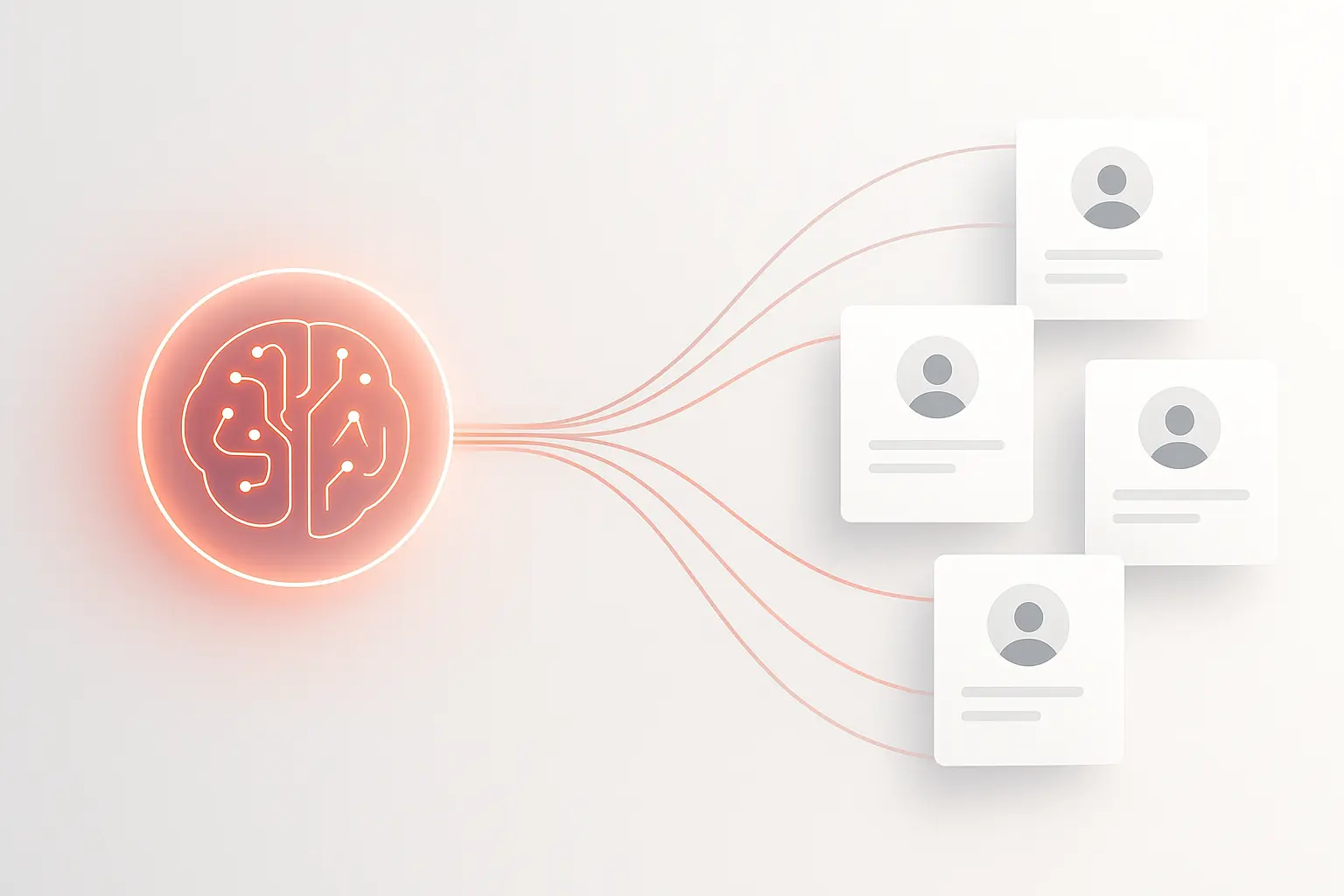
Conversational AI interviews measure how candidates think in real time. Multi-agent scoring reduces inconsistency by having multiple AI perspectives converge on a decision instead of relying on a single model view.
Fraud and identity checks protect the integrity of each interview. Blind scoring mode allows evaluations to happen without seeing name, college, resume design, or brand names, which reduces the influence of those cosmetic factors. When those details are reintroduced later, they appear on top of an already fairer, skill-grounded evaluation.
In short, only true skill is allowed to drive the score.
Final Takeaway
Traditional AI hiring tools often reward how good a resume looks. Kairox Talent360 is built to reward how good a candidate actually is.
Skills over signals, capability over cosmetics, fairness over formatting. As hiring moves into 2026 and beyond, this shift from resume-first to skill-first will not be optional for serious teams. It will be necessary.
If you want to see how this works in practice, you can explore more about Kairox Talent360 on our site and see how a truly skill-first approach changes the way you hire.
Related Articles

7 Hiring Trends in 2025; And How Kairox Aligns With Every One
From AI-driven screening to fraud prevention and high-volume automation, here are the 7 hiring trends companies are adopting and how Kairox delivers on each.
Agentic AI Interviews; Human-Like Screening, 24/7
Run consistent, bias-aware interviews anytime. Adaptive questions, role-based difficulty, and instant scoring without scheduling.
The Resume Is Dead. What Comes Next?
AI has officially killed the resume. Here's what smart companies are doing instead, and why the hiring industry will never be the same.
Ready to transform your hiring process?
Join thousands of companies using Kairox to build better teams faster.
Get Started Today